Choice first
A small number of clear invitations makes it easier for a child to notice an activity and choose whether to try it. We plan layouts so each zone reads clearly from the entrance.
How we design
Every gym we design is built around a simple idea: children deserve space to explore at their own pace, with active choices nearby and a softer place to pause. That idea shapes every layout we draw.
Design principles
A good gym looks different for every child and every room. We design spaces that support movement without turning play into a performance, with room for observation, repetition, connection, and rest.
A small number of clear invitations makes it easier for a child to notice an activity and choose whether to try it. We plan layouts so each zone reads clearly from the entrance.
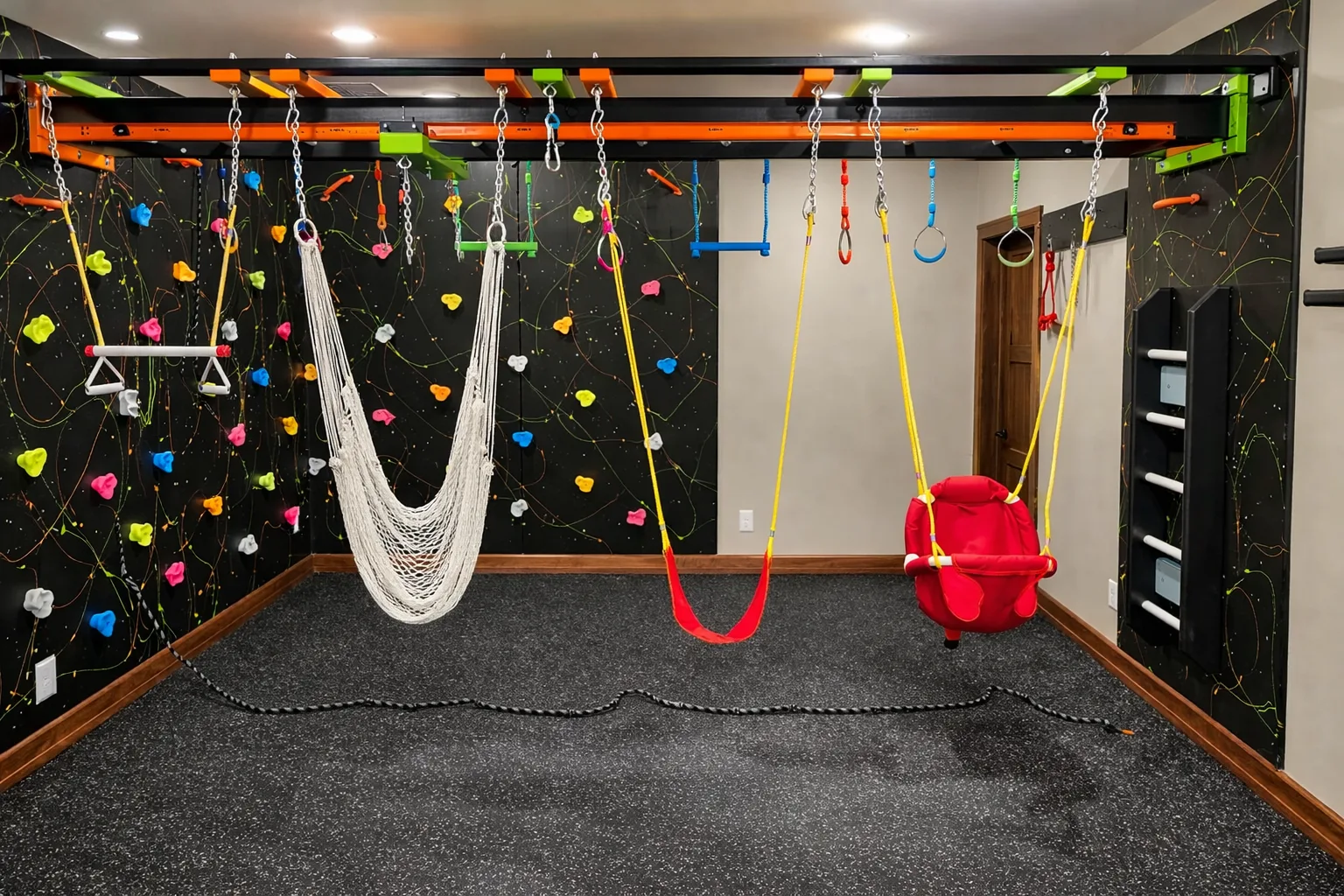
Different surfaces, grips, and movement patterns give children something concrete to explore. We combine climbing, swinging, and balance equipment so each piece earns its place.
Pausing, watching, and returning to a familiar activity are valid ways to take part. Every gym we design includes a calmer place that stays connected to the room.
The heart of every gym
What matters is a space that welcomes the child in front of you, makes movement feel approachable, and leaves room for each day to unfold in its own way. That is what we design for.
Principles in practice
Design decisions are where a philosophy becomes a room. These are a few of the ways our principles shape what we build.
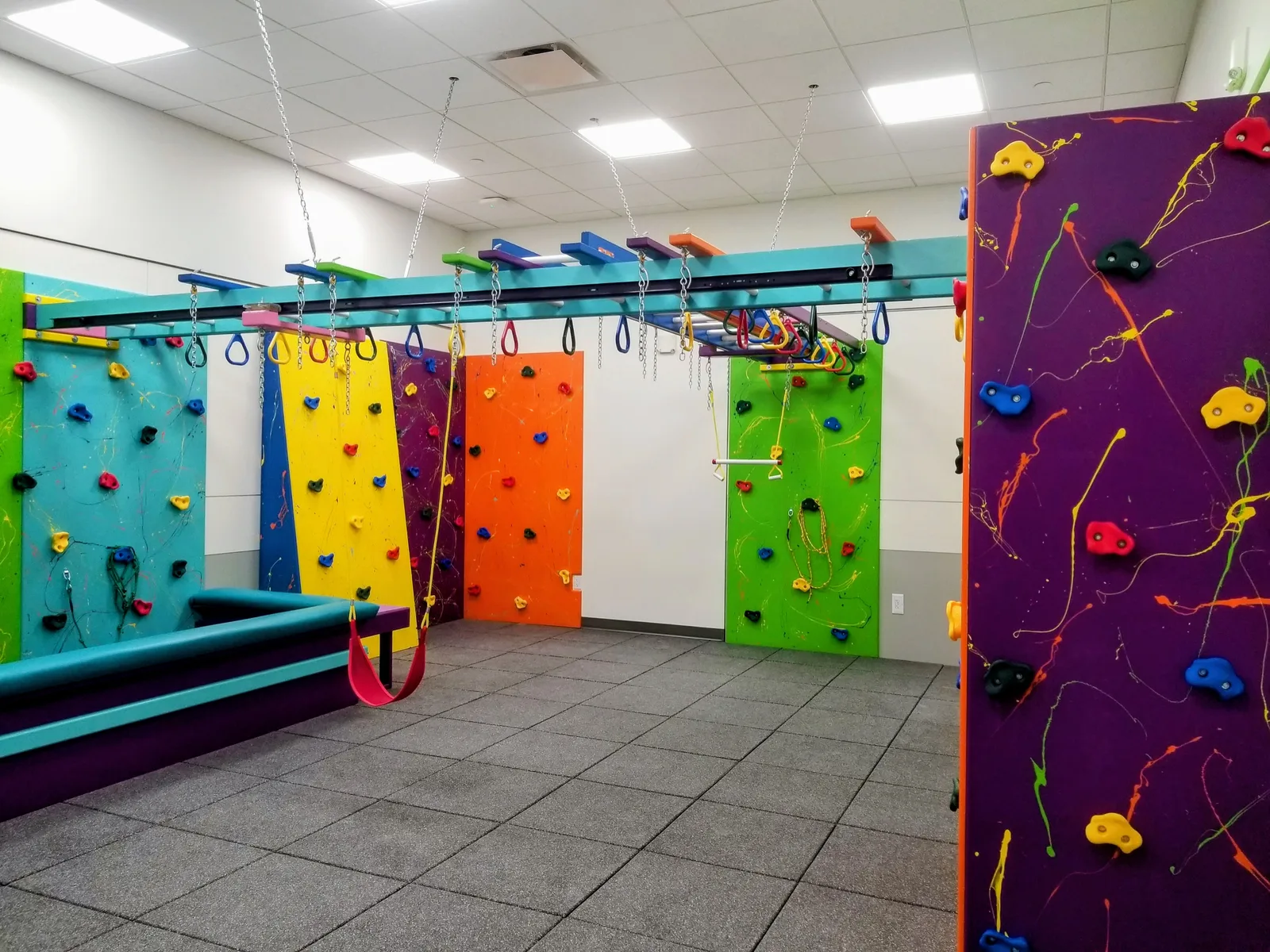
We limit how many activities compete for attention from any one spot, so a child can pick one route without feeling pulled in every direction.
Favorite routes get repeated. We leave enough clearance around climbing and swing zones for a child to do the same thing again without crowding anyone else.
A quiet nook, soft seating, or a cocoon swing sits within sight of the action. Stepping away should never mean leaving the room.
Design with us
Questions about layout, pacing, or calming spaces are always worth asking before the design begins.